
When it comes to protecting and presenting your products, packaging material plays a major role in both performance and appearance. Two of the most common flexible packaging options are shrink film and poly bags. Each provides distinct benefits depending on the product, application and production goals.
Choosing between them requires balancing aesthetics, durability and cost. At First Packaging Systems, we help businesses evaluate all these factors to select materials that align with their packaging line and customer expectations.
Understanding the Basics
Shrink film is a polymer plastic film that contracts when heat is applied. It creates a tight, secure wrap around the product. It’s widely used for multipacks, retail displays and items that need clear, tamper-evident protection.
Poly bags, on the other hand, are preformed bags made from polyethylene or similar resins. They can be open-ended, resealable or heat-sealed to offer a simple and versatile option for packaging loose or irregularly shaped items.
While both serve protective functions, their strengths differ significantly.
Aesthetics: Presentation and Shelf Appeal
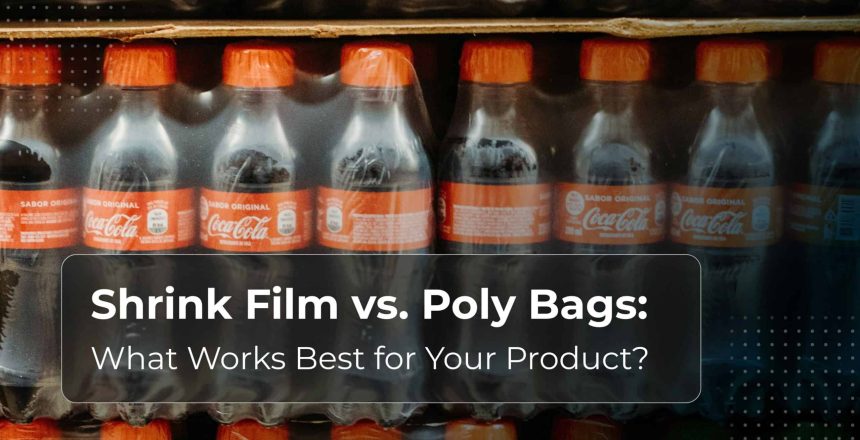
Shrink film provides a clean, glossy finish that conforms to the shape of the product. It can enhance the visual appeal and professionalism. It’s especially popular in retail packaging for products that benefit from clear visibility—like bottled beverages, electronics, cosmetics and boxed foods.
The tight seal also allows for easy barcode scanning and label application, helping maintain a consistent brand look across multiple product types.
Poly bags tend to offer a more utilitarian appearance. They can be printed for branding and are available in various opacities, but they don’t contour around the product as neatly as shrink film. However, appearance is often less important for industrial or bulk packaging. Simplicity and speed of packaging may be higher priorities for manufacturers. This makes poly bags a cost-effective choice when aesthetics are less critical.
Durability and Product Protection
When it comes to protection, shrink film generally offers greater durability and puncture resistance. The snug fit prevents shifting inside the package, reducing the risk of damage during transit. It also provides a tamper-evident barrier, which is essential for food, pharmaceutical and consumer goods applications.
Poly bags are lighter and more flexible, making them better suited for products that don’t require a form-fitting wrap. Examples include clothing, spare parts or bulk components. They’re ideal for packaging items that vary in size or shape, and resealable options add convenience for end users.
In humid or dusty environments, both materials can be used with desiccants or inner liners to enhance protection.
Cost and Operational Efficiency
From a cost perspective, poly bags often have the edge in simplicity. They require less energy to seal and can be filled manually or automatically, depending on volume. For operations with frequent product changes or shorter runs, poly bags may offer better flexibility and lower material costs.
Shrink film, while slightly more expensive upfront, can deliver long-term savings through speed and consistency. Automated shrink-wrapping equipment increases throughput, reduces labor and delivers uniform results. For high-volume operations, these efficiencies often offset the higher material cost.
It’s also worth noting that modern shrink films are available in thinner gauges that reduce material use without sacrificing strength—an advantage for both cost control and sustainability.
Choosing the Right Option
The best choice depends on your product type, production setup and branding goals.
- Choose shrink film if your priority is shelf appeal, tight product containment or tamper resistance.
- Choose poly bags if you need flexibility, simplicity or low-cost protection for irregular items.
In many cases, companies use both shrink film and poly bags for specific packaging applications. At First Packaging Systems, we help evaluate your full operation—from material performance to automation compatibility—to recommend the most effective solution. Contact FPS today to get started.